Internal Seminar on: Board Gender Diversity, Government Effectiveness and Sustainability Performance
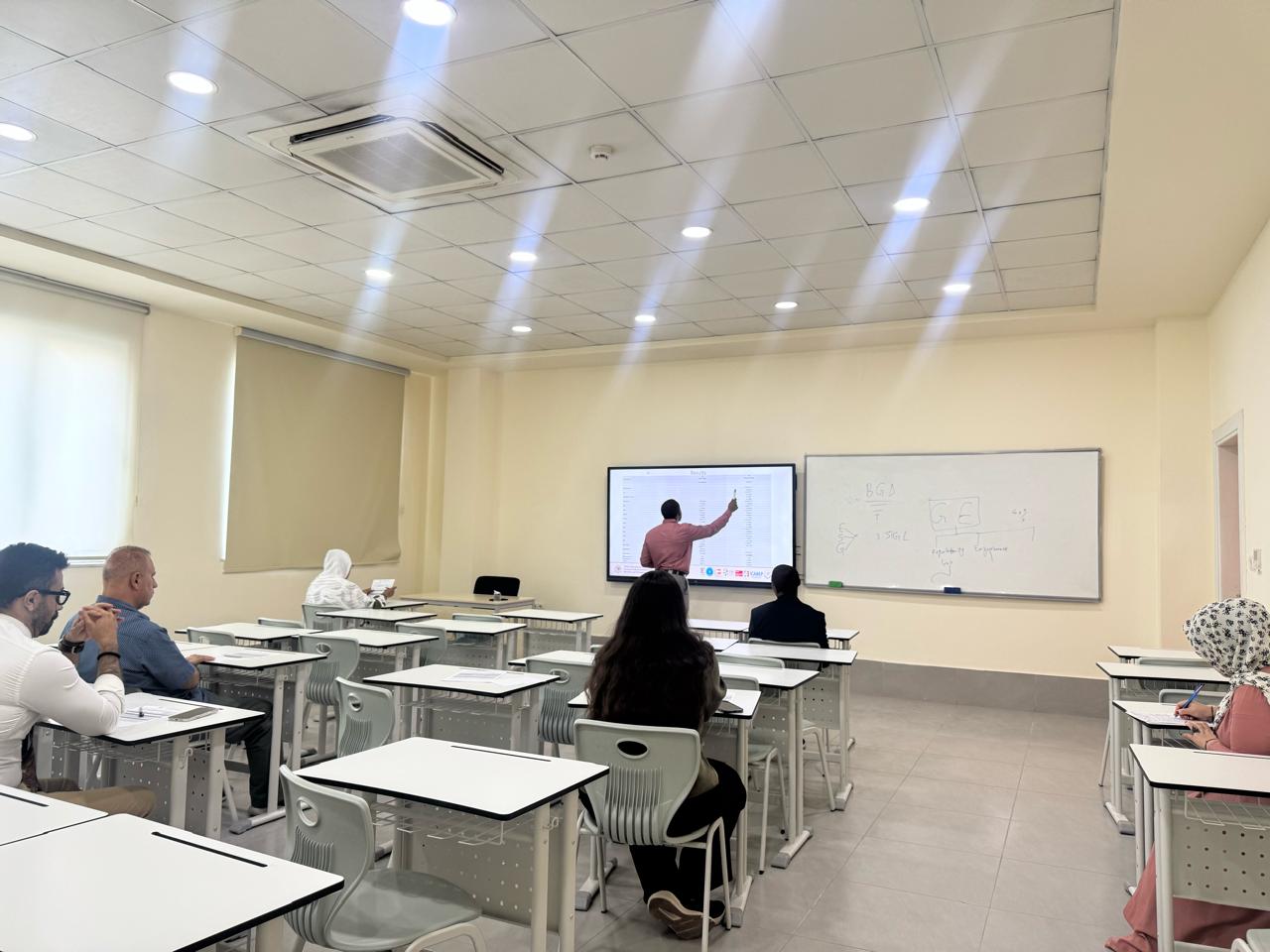
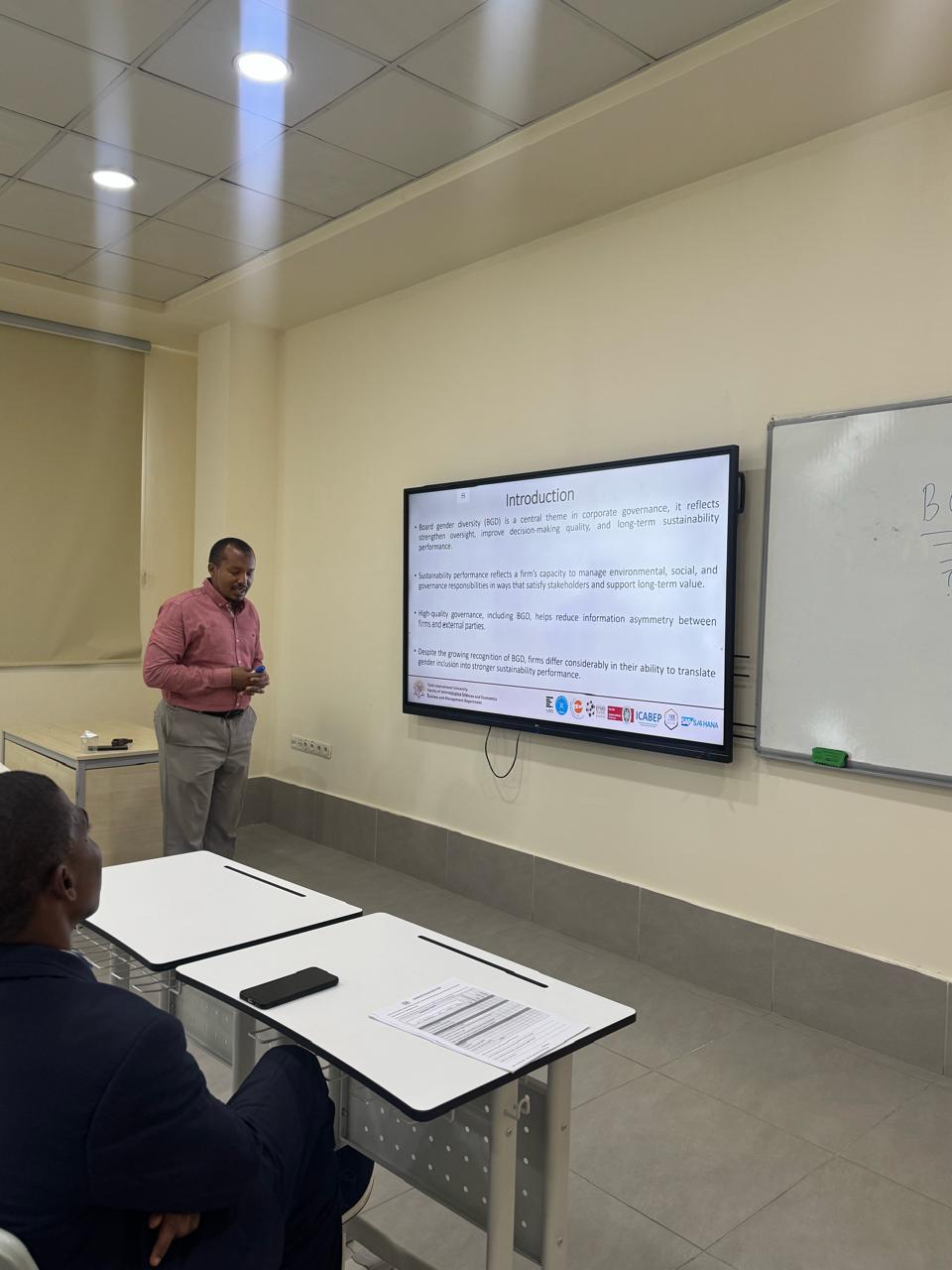
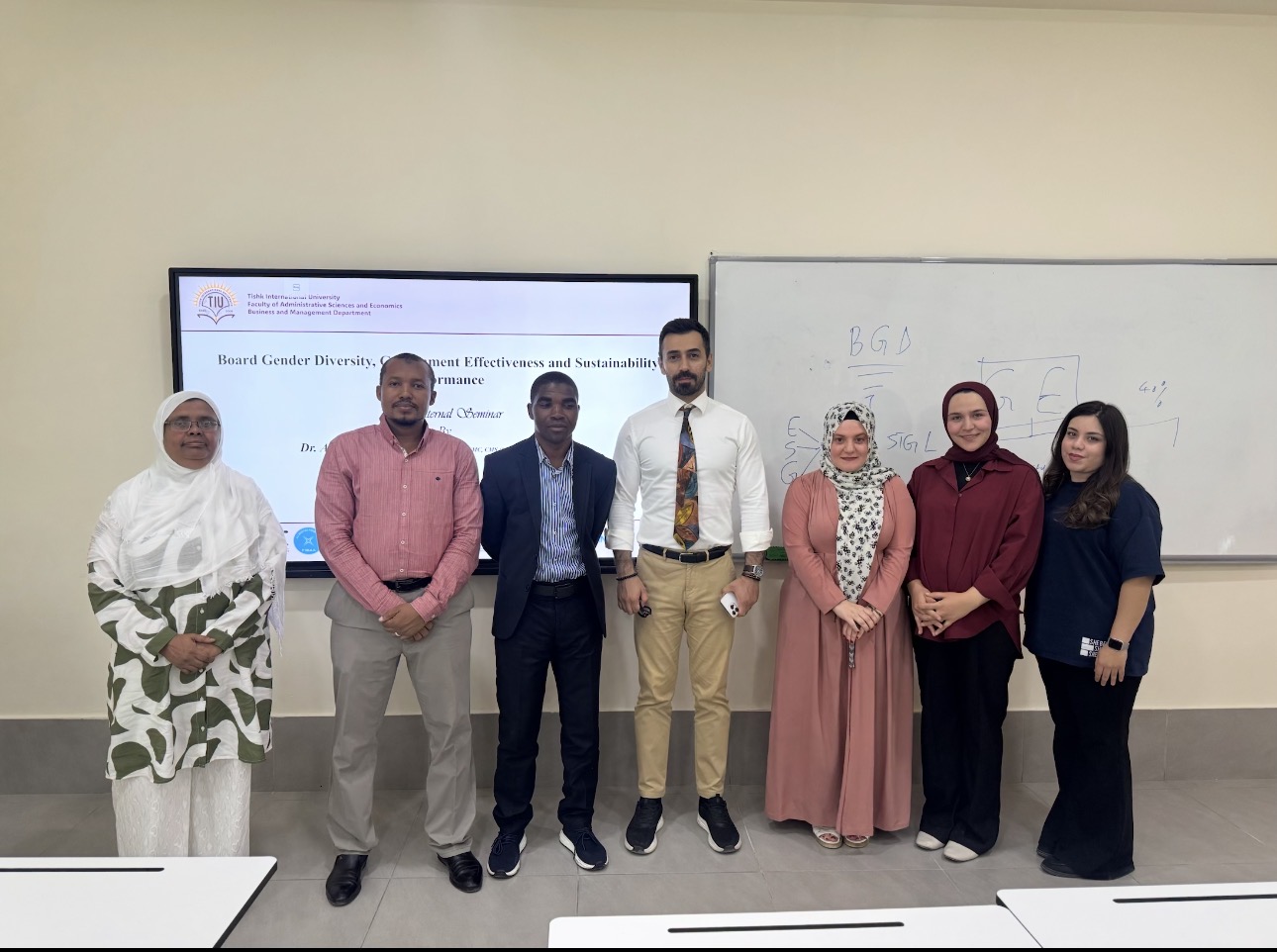
The Departments of Accounting and Finance and Banking and Finance hosted an internal research seminar on 12th August 2026, during which Dr. Abubakar Balarabe Karaye, Head of both departments, presented a working paper titled “Board Gender Diversity, Government Effectiveness and Sustainability Performance.” The seminar brought together academic staff for an in-depth discussion of one of the most consequential questions in contemporary corporate governance research: does the gender composition of a corporate board influence how sustainably a firm behaves — and does the quality of a country’s institutions change that answer?
The study draws on an international panel dataset of 8,897 firm-year observations from non-financial listed firms across 57 countries over the period 2015–2023. Sustainability performance is measured using the LSEG (formerly Refinitiv) ESG score, board gender diversity is defined as the proportion of female directors on the board, and government effectiveness is captured through the Worldwide Governance Indicators (WGI). The empirical analysis employs GLS estimation with country, industry, and year fixed effects, with robustness confirmed through Instrumental Variable Two-Stage Least Squares (IV/2SLS) estimation to address endogeneity concerns.
The findings reveal that board gender diversity has a positive and significant effect on sustainability performance, suggesting that gender-diverse boards enhance firms’ social responsibility, transparency, and stakeholder inclusivity. Government effectiveness also independently shows a strong positive impact on sustainability outcomes, indicating that effective institutional environments provide a supportive regulatory framework for sustainable corporate practices. Critically, the interaction between board gender diversity and government effectiveness is positive and significant — confirming that the influence of gender-diverse boards on sustainability performance is amplified in countries with higher government effectiveness. This implies that female directors are more effective change agents when institutional structures are efficient and governance quality is strong.
The seminar generated rich discussion among staff and reflects the departments’ ongoing commitment to advancing rigorous, internationally relevant scholarship.
Keywords: Board Gender Diversity; SDG 5: Gender diversity; Government Effectiveness; Sustainability; Sustainability Performance; Sustainable Performance; SDG 8, Decent Work and Economic Growth