
National Workshop on Russia-Ukraine War
The International Relations and Diplomacy Department, Faculty of Administrative Sciences and Economics at Tishk International University, organised a National Workshop on the Russia-Ukraine: Causes, Consequences and Solutions, held on December 20th, 2022.
The workshop moderator, Asst. Prof. Dr. Basiru Musa delivered an opening speech, introducing the two distinguished speakers, Mr. Dana Sajadi from TIU and Dr. Momen Zellmi from Cihan University, Sulaymaniah, Kurdistan Region, Iraq.
The first distinguished speaker, Dr. Momen Zellmi, made his presentation on the regional implications or impact of the Russia-Ukraine war on the economic, political and social spheres of the Kurdistan Region and Iraq, where he explained how the war resulted in severe inflation, as food prices rose, and many people had their finances squeezed. He also explained how the war worsened the political situation of the Kurdistan Region, as neighbouring state actors intensified their interference in the politics and economics of the Region, with severe implications for its stability, peace and development. Furthermore, he pointed out how the war led to an increase in oil prices.
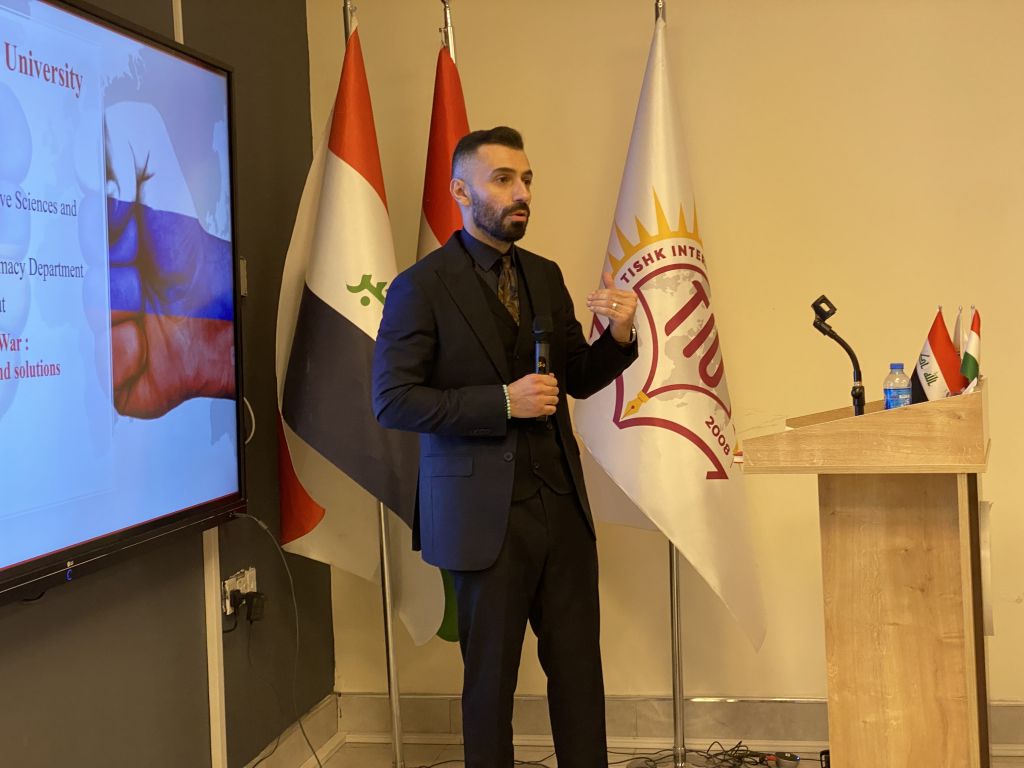
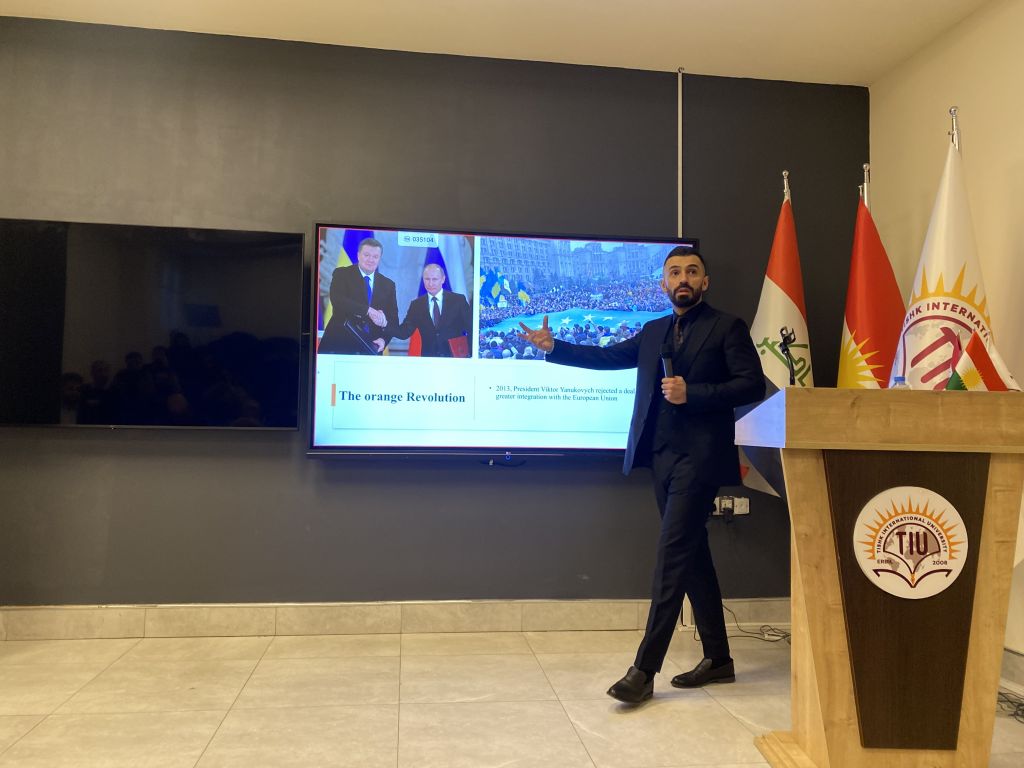
The second distinguished speaker, Mr. Dana Sajadi, took the participants through the historical trajectory, causes, and consequences of the Russia-Ukraine war and suggested several viable solutions. He explained that some of the remote and immediate causes of the Russia-Ukraine war could be traced to both the Cold War era and the beginning of the Post-Cold War era in the early 1990s after the collapse of the Soviet Union. He identified the continuing existence of NATO, its expansion and the readiness of Ukraine to join NATO, even though Russia made its reservations, pointing out national security concerns as one of the major causes of the war. Some consequences include disruption to the global supply chain, global inflation, global food crises, and displacement of millions of people, resulting in a severe humanitarian crisis in Ukraine, Europe and other parts of the world.
The following recommendations were made:
- A more restrained US foreign policy.
- Increased global cooperation.
- Respect for International Law and Conventions.
- Adoption of diplomatic means to resolving conflicts.
- Formulation and implementation of policies by the KRG and the Iraqi Government would strengthen the security of the KRI and Iraq, thus protecting them from global shocks.
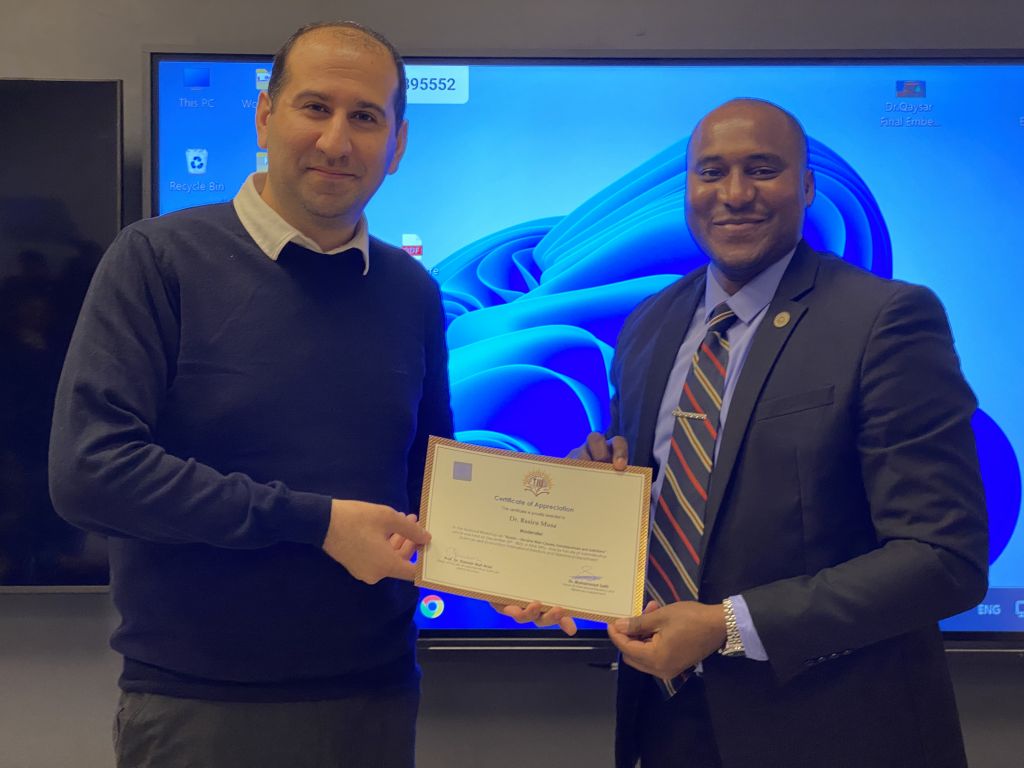
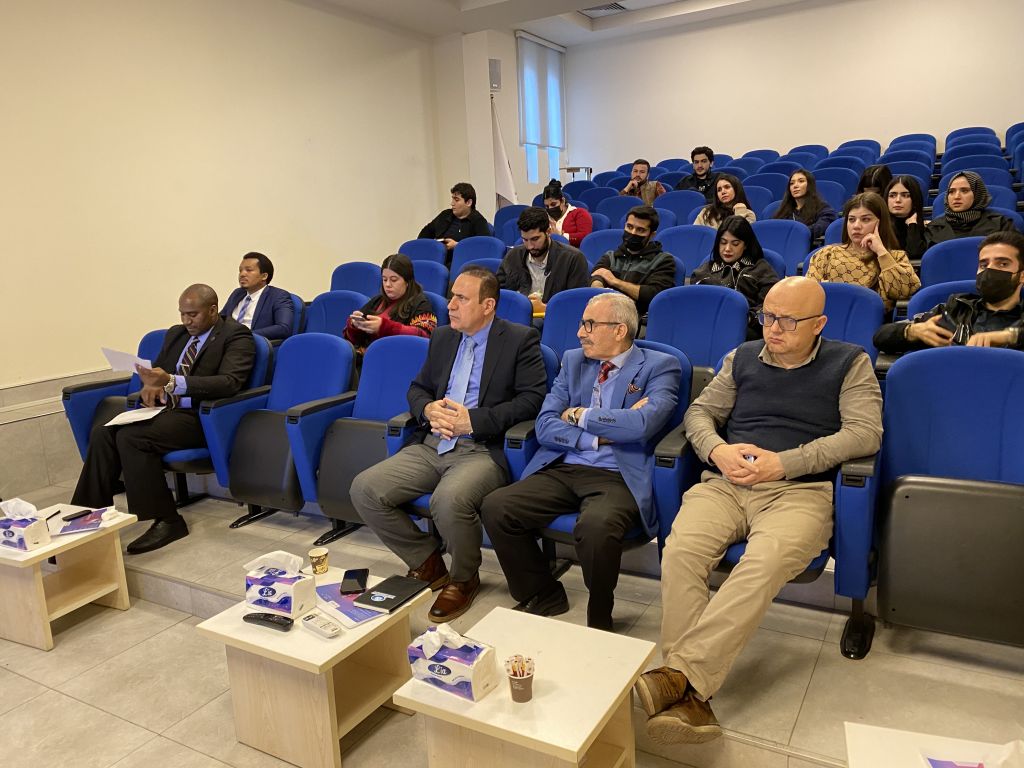
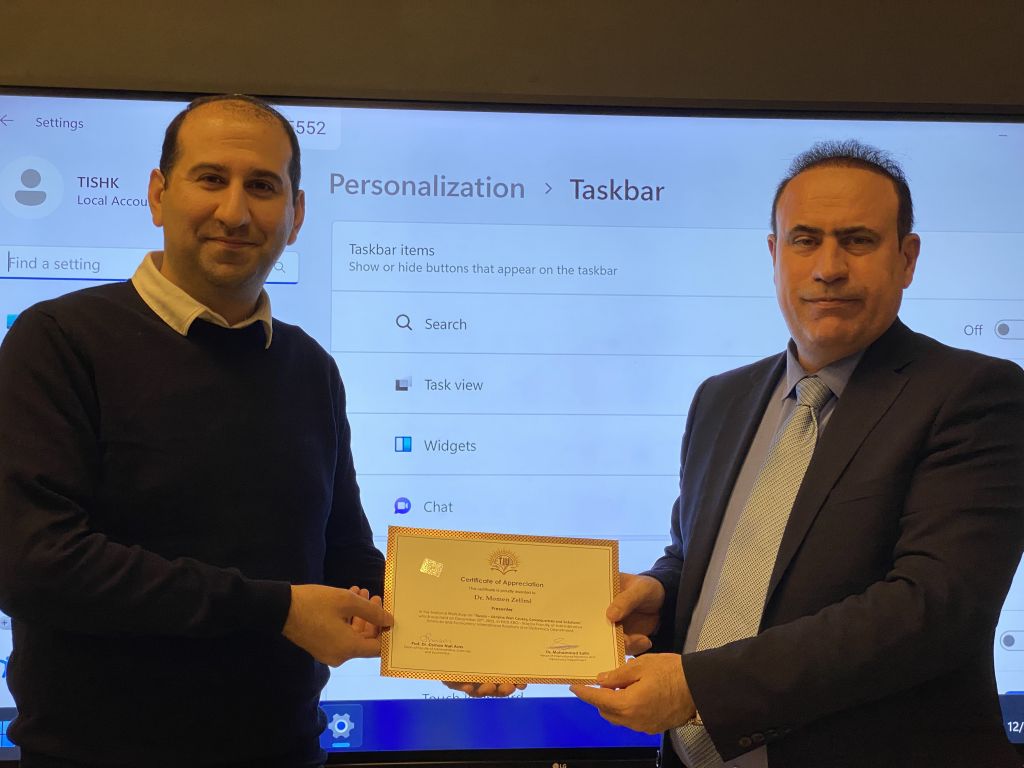
The Q&A session followed, where all the questions asked by the participants, including TIU academics and students, were adequately and convincingly answered. Finally, Certificates of Appreciation were issued to the two distinguished speakers and workshop moderator.