
International Workshop on International Migrants Day
On the occasion of International Migrants Day, celebrated annually on December 18th, the International Relations and Diplomacy Department, Faculty of Administrative Sciences and Economics at Tishk International University, organised an International Workshop entitled: International Migration: Causes, Challenges and Opportunities.
International Migrants Day reflects on the role of migrants in our societies, their positive contributions, and the challenges they face in achieving their full human potential and enhancing their capabilities. The Day came about when the United Nations General Assembly, on December 18th, 1990, adopted a resolution on the International Convention on the Protection of the Rights of all Migrants and Members of their Families. On December 4th, 2000, the United Nations declared December 18th of every year as International Migrants Day, serving as a reminder that human rights are not earned by virtue of being a hero or victim but are an intrinsic entitlement of everyone, irrespective of origin, age, gender, and status.
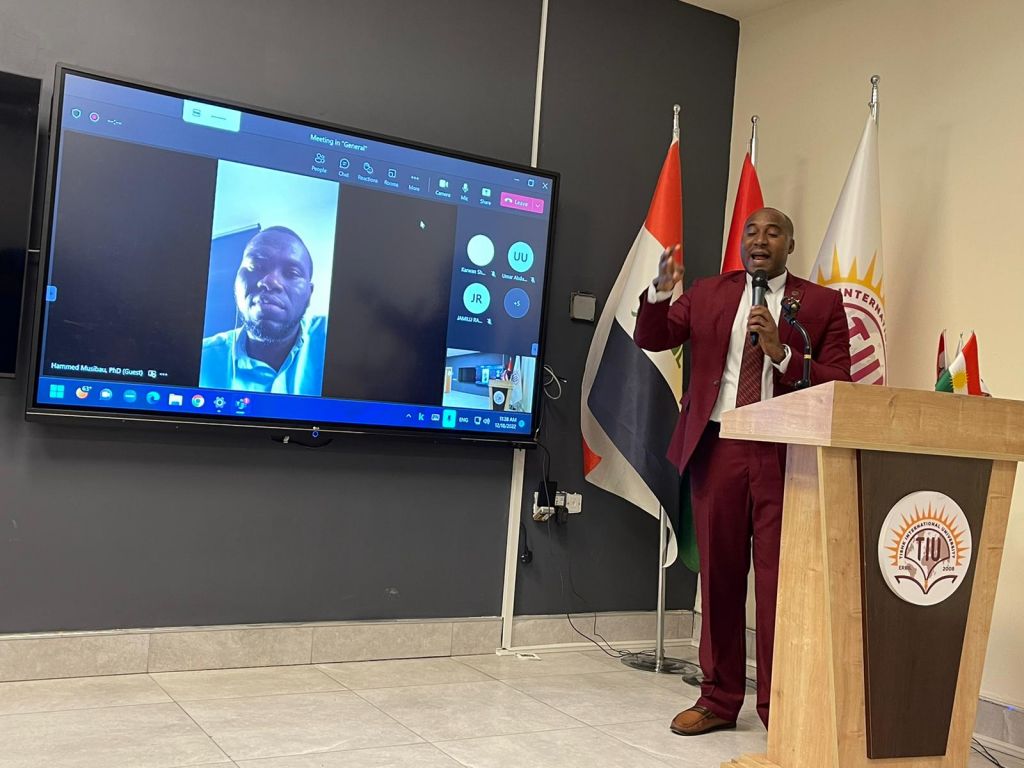
The workshop began with a welcome address by the Host, Mr. Bayad Sarwar, who introduced the two distinguished speakers as Dr. Hammed Oluwaseyi Musibau from the University of Tasmania, Australia and Asst. Prof. Dr. Basiru Musa from Tishk International University.
The first distinguished speaker (Dr. Hammed Oluwaseyi Musibau) discussed the political and economic contexts of international migration, where he explained International Migration as the movement of people across international boundaries in search of greener pastures or better opportunities in the case of global economic migrants and protection in the case of international humanitarian migrants, such as refugees and populations of concern. He stated that human beings have been migrating since the beginning of time. There are currently 281 million international migrants (Economic & Humanitarian), representing 3.6% of the global population (World Migration Report, 2022). Theoretically, people migrate because of factors in both the areas of origin and destination, intervening obstacles and personal reasons, and other push factors, such as unemployment, poverty, underdevelopment, bad governance, conflicts/wars, persecution, natural disasters, and pull factors, such as employment opportunities, high income, security, freedom, sound and stable health and education systems, good governance, human rights protection and promotion, economic and social stability, etc.
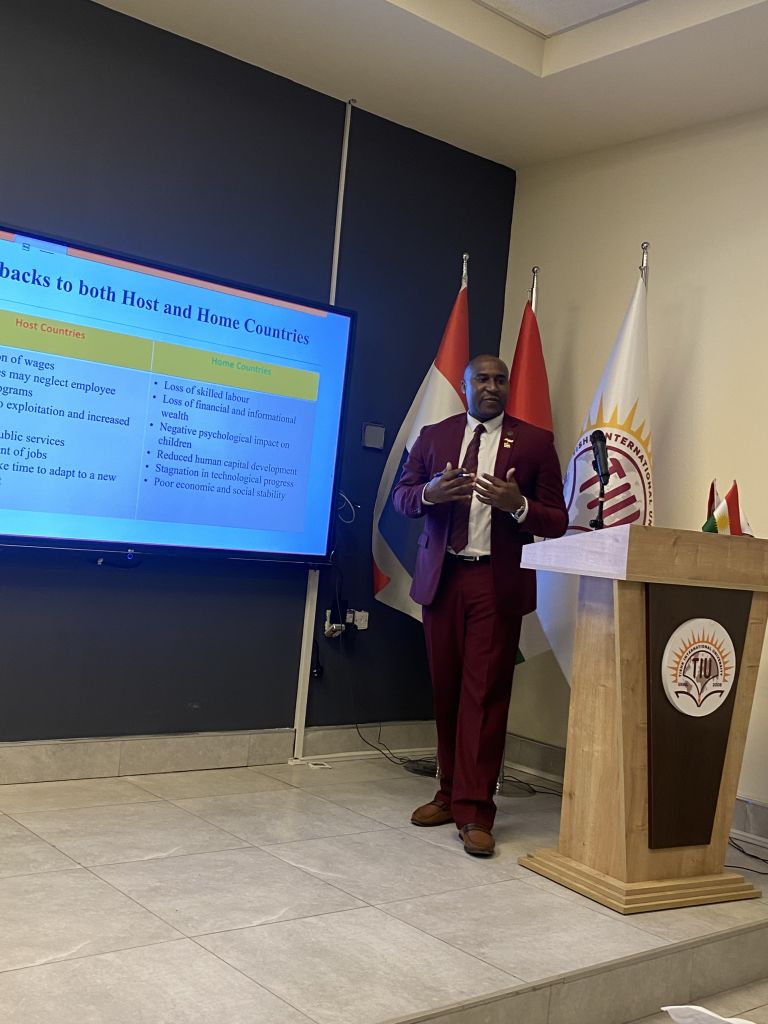
The second distinguished speaker (Asst. Prof. Dr. Basiru Musa) took the audience through the contributions of migrants to both their host and home countries, the challenges being faced, and the ways to address them. He stated the contributions of migrants to their host countries as increased economic growth through human capital development and technological progress, innovations and ideas, filling job vacancies in the labour markets, benefit to locations where most of the population is old, additional sources of tax, favourable economic and cultural impact, increased macroeconomic and political stability. The contributions to the home states include remittances, reduced unemployment, reduced absolute poverty, reduced inequality, transfer of skills, contacts and other valuable tools, improved bilateral relations, reduced fiscal pressures, etc. He further explained the drawbacks of international migration to the host countries as depression of wages, neglect of employee benefit programs, exploitation and increased crime rates, the strain on public services and displacement of jobs. While to the home states, the disadvantages include loss of skilled labour, loss of financial and informational wealth, negative psychological impact on children, reduced human capital development, stagnation in technological progress and poor economic and social stability.
The second distinguished speaker (Asst. Prof. Dr. Basiru Musa) further highlighted the benefits or opportunities of international migration for the migrants as increased income and financial security through well-paid jobs, increased standard of living, increased global networks, escaping conflicts/wars, escaping a Malthusian nightmare/catastrophe, protection, a more generous welfare system, global visibility, increased independence and freedom, well-equipped working environment, increased skills for self-development, climate change adaptation. On the other hand, he identified the challenges facing migrants as language, geographical and cultural barriers, acclimatisation/adjustment problems, lack of health insurance coverage in some countries, discrimination/racism in some countries, unfavourable or restrictive immigration policies in some countries, limitation on the right to work in some countries and lack of acceptance/tolerance in some countries.
The distinguished speakers shared the following recommendations:
- A sustained international action to manage global migration and accord migrants, both economic and humanitarian, protection, dignity, respect and rights for a win-win pay-off.
- Formulation and implementation of the right, fair immigration policies.
- Increased international cooperation.
- Enhancing the role of the International Organization for Migration (IOM) and other related organisations.
- Increased value addition by migrants to their host countries by creating international economic migrants’ corporate social responsibility fund.
- Demonstration of willingness by migrants to learn the local languages of their host countries and ensure respect for their cultures and religions.
- Respect for international conventions on the rights of migrants, such as the right to life and personal security, right to protection against refoulment, right to seek asylum, right to work, right to human dignity and equality, right to non-discrimination, right to remain, right to return, etc.
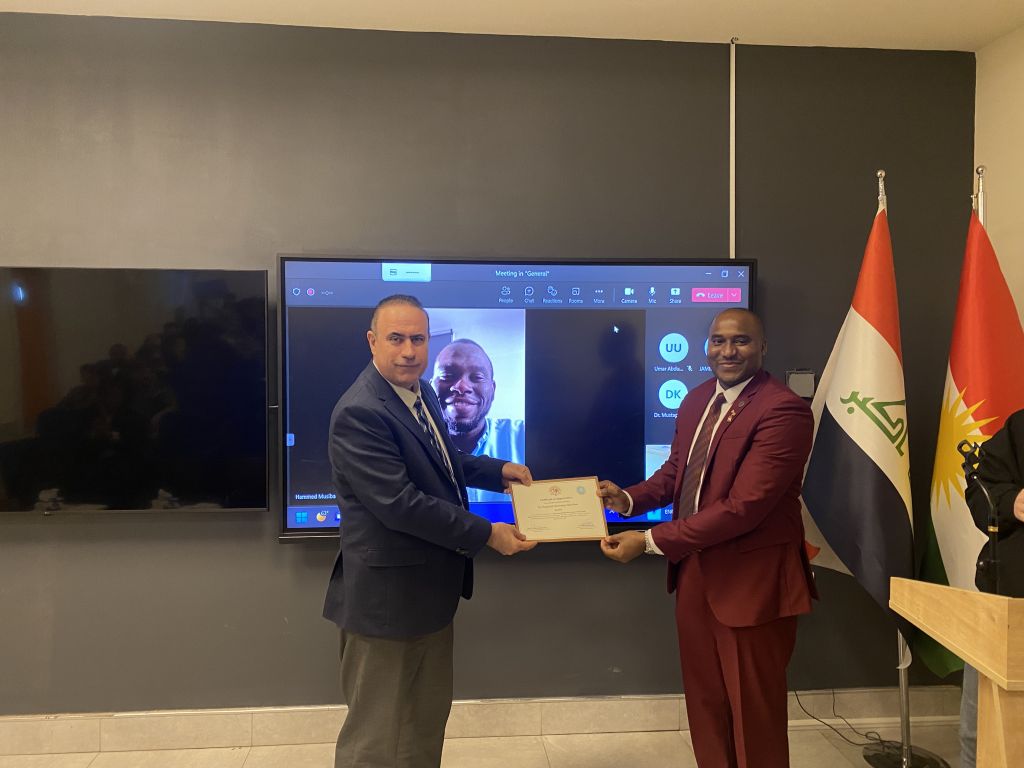
The Q&A session followed, where the speakers adequately answered the questions asked by the participants, including TIU academics, international participants and students. Finally, Certificates of Appreciation were issued to the two distinguished speakers.