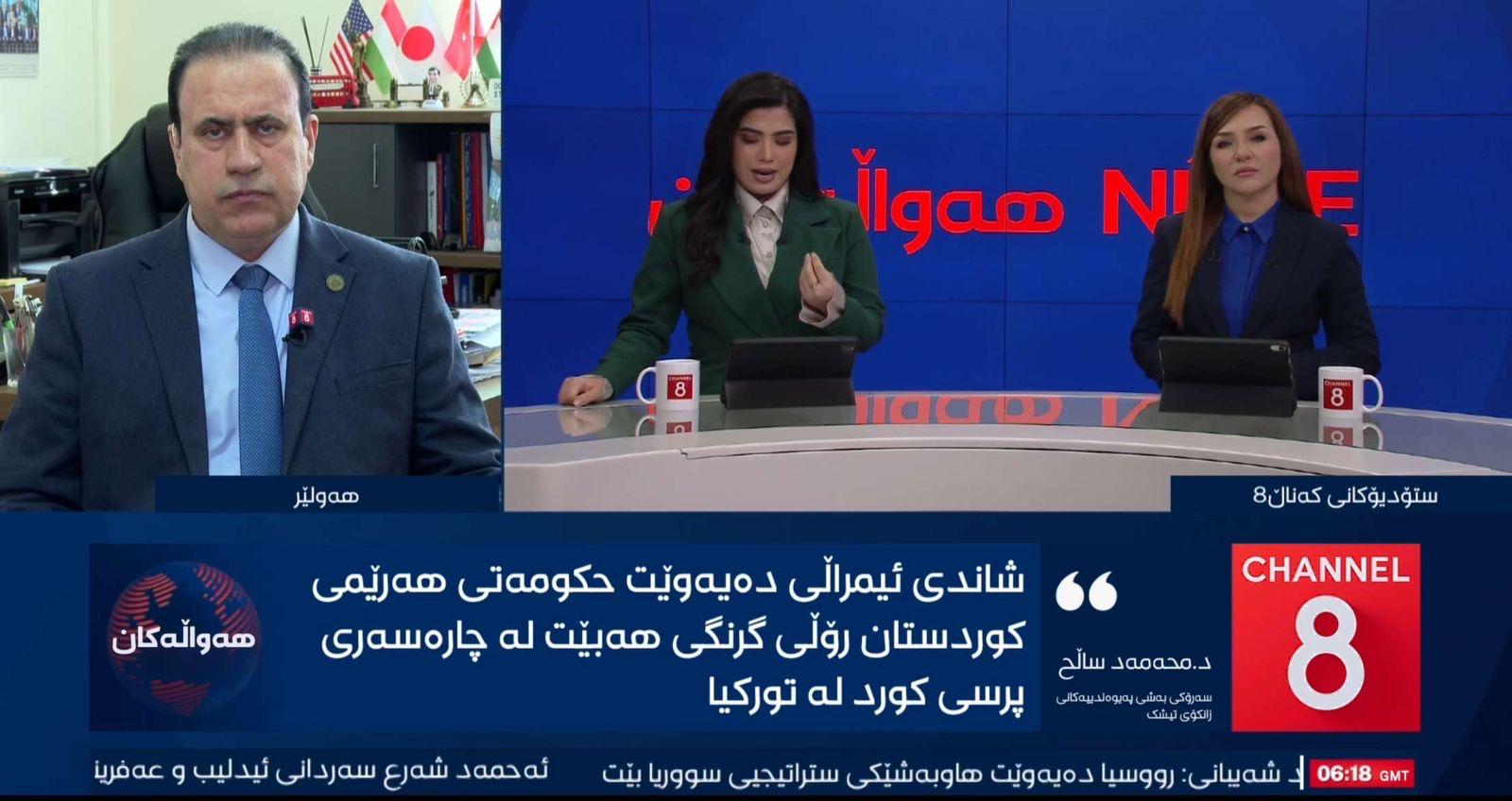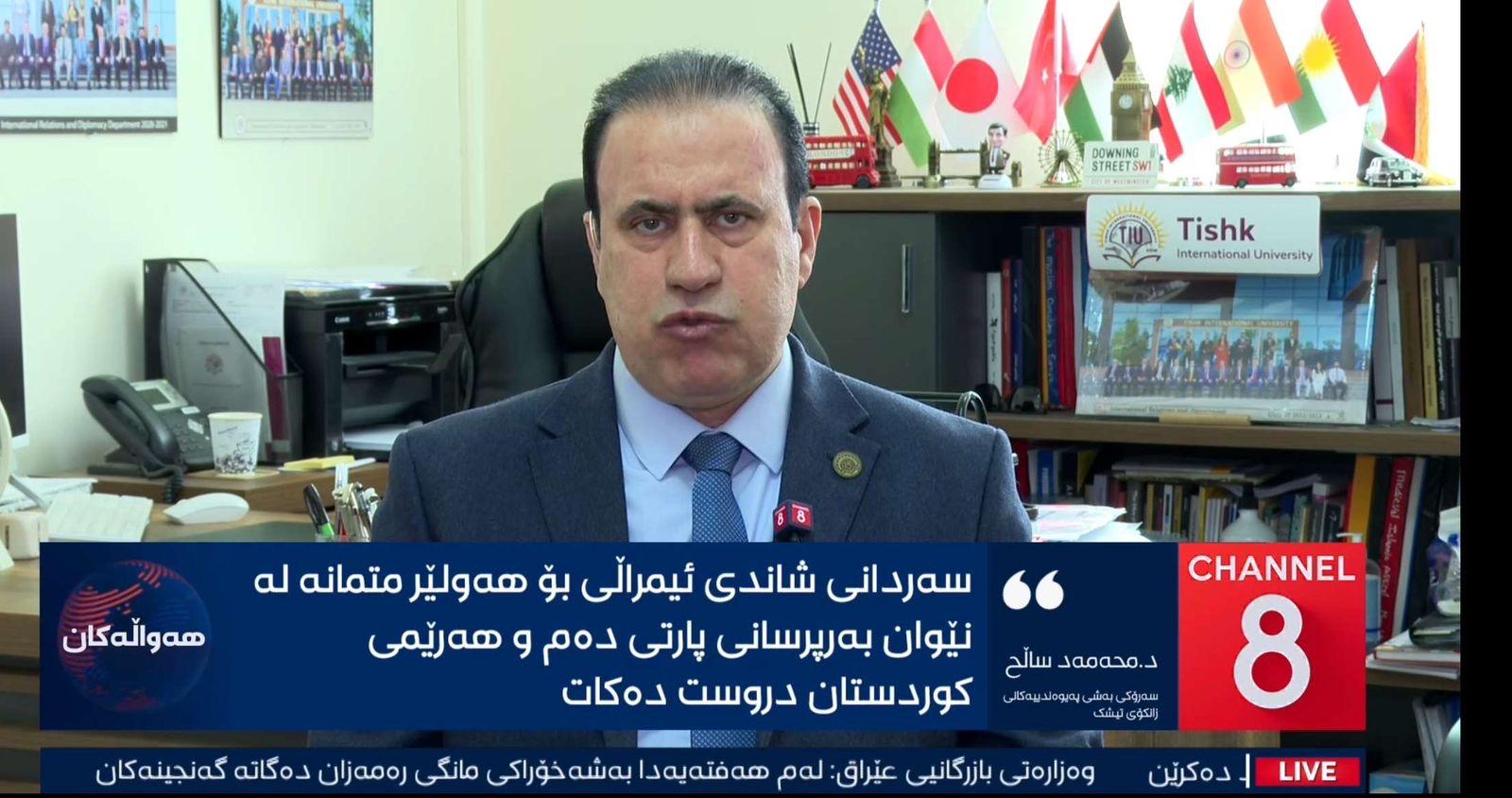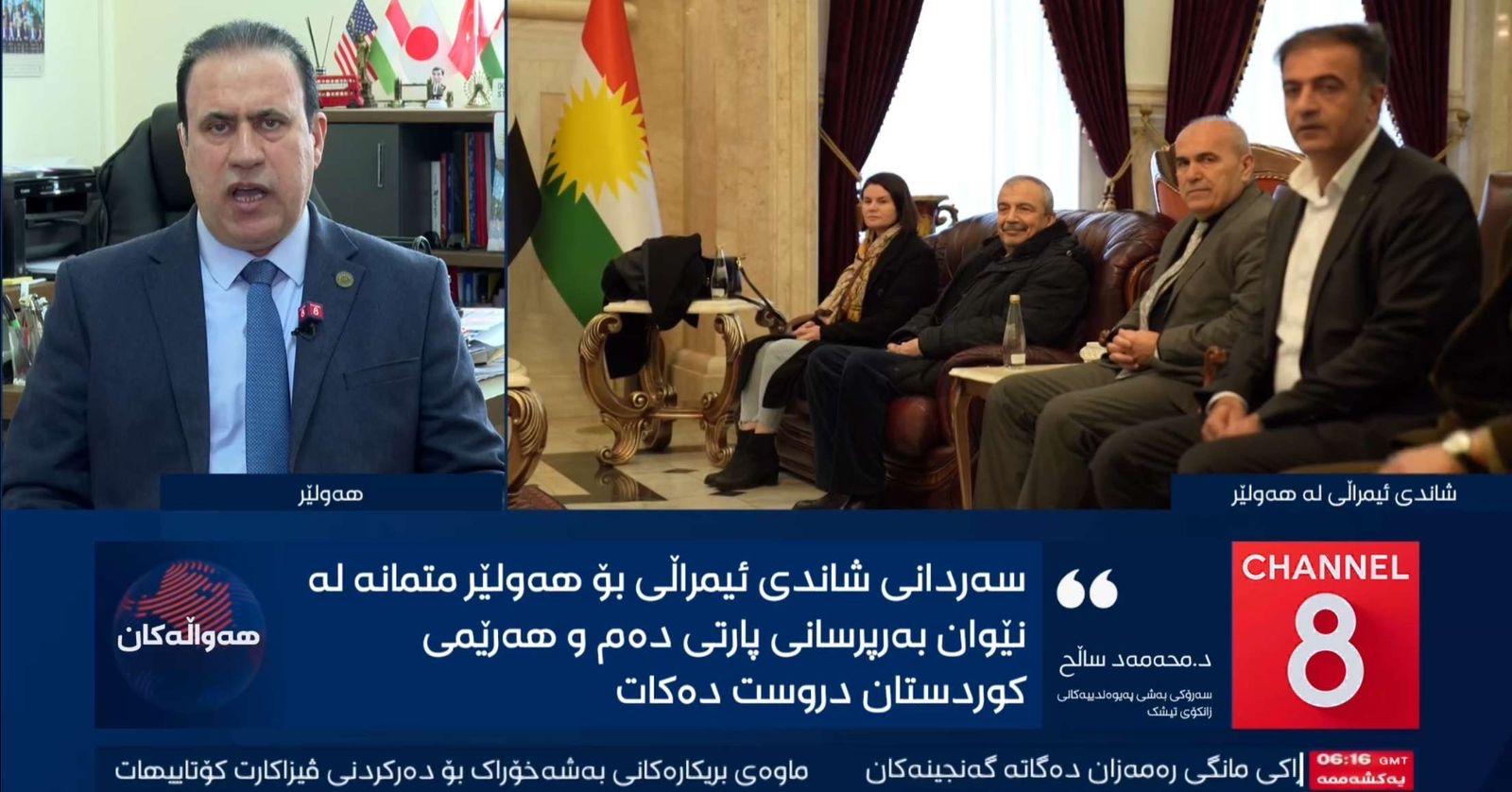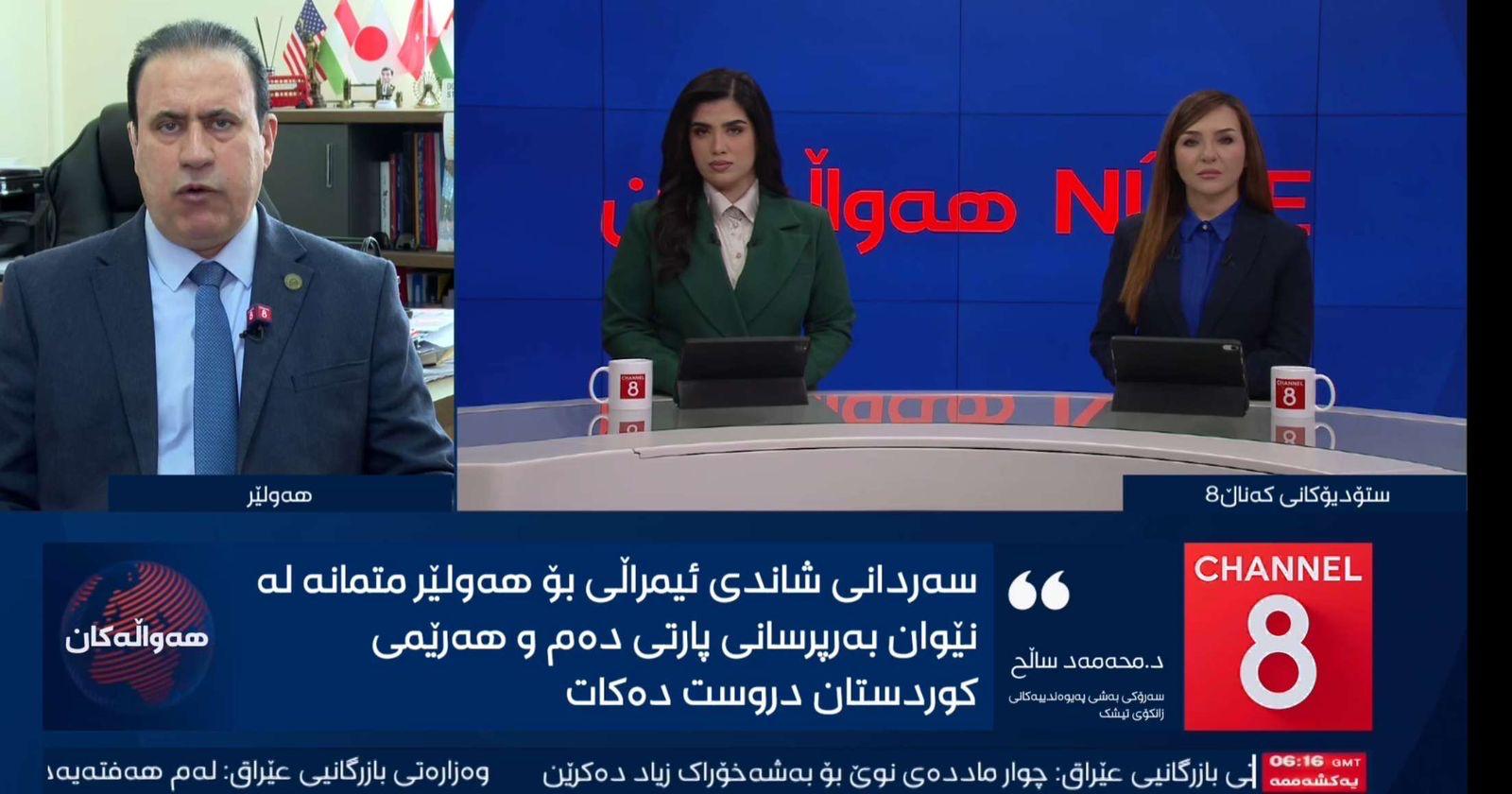

Dr. Mohammad Salih Mustafa, Head of the International Relations and Diplomacy Department (IRD), featured on Channel 8 on Sunday, February 16, 2025, to discuss the recent visit of a high-level delegation from Turkey’s Peoples’ Equality and Democracy Party (DEM) to the Kurdistan Region. The delegation engaged in talks with senior officials of the Kurdistan Regional Government (KRG) and leaders of the region’s prominent political parties, sparking optimism for a renewed push toward peace and dialogue between Turkey and the Kurds.
A Critical Moment for Peace and Dialogue
In his interview, Dr. Mustafa emphasized the significance of this visit, describing it as a potential turning point in the history of the Middle East. He stressed that the current geopolitical climate offers a unique opportunity for Turkey and the Kurds to build a constructive and lasting peace. “This is a critical moment for both sides,” Dr. Mustafa stated. “It is an opportunity to move forward on democratic principles, ensuring the rights of the Kurdish people while securing peace and stability for Turkey and the wider Kurdistan.”
Regional Implications and Lessons from the Past
The visit holds particular importance given the interconnected struggles of Kurdish populations in Northern Kurdistan (southeastern Turkey), Rojava (northern Syria), and the Kurdistan Region of Iraq. Dr. Mustafa highlighted how progress in one area could positively impact the others. “The situation of the Kurds in Rojava and the Kurdistan Region is directly influenced by the relationship between Turkey and the Kurds in Northern Kurdistan,” he explained. “A peaceful resolution in one area can create a domino effect, leading to stability across the region.”
Reflecting on past failures, Dr. Mustafa pointed to the collapsed peace process between the Turkish government and the Kurdistan Workers’ Party (PKK) between 2009 and 2015. He underscored the importance of learning from the mistakes and mistrust that derailed those negotiations. “The lessons of the past must guide us,” he said. “Trust-building, transparency, and a commitment to democratic principles are essential for any peace process to succeed.”
The Pivotal Role of the KRG
Dr. Mustafa also highlighted the crucial role of the KRG and its officials in facilitating dialogue and acting as a guarantor for peace talks. “The KRG, along with the political parties in the Kurdistan Region, has a responsibility to help pacify the situation and create an environment conducive to peace,” he said. “Their involvement is vital in ensuring that this process moves forward.”
The DEM Party’s visit to the Kurdistan Region is seen as a positive step toward addressing long-standing issues and fostering mutual understanding. Dr. Mustafa expressed hope that this engagement would lead to concrete actions and a renewed commitment to peace. “This is not just about dialogue; it’s about taking tangible steps to address the root causes of conflict and building a future based on coexistence and mutual respect,” he concluded.
As the Middle East continues to navigate a period of profound change, the visit of the DEM Party delegation and the insights shared by Dr. Mustafa underscore the importance of seizing this moment for the benefit of all parties involved. The international community will be watching closely as these developments unfold, with the hope that this marks the beginning of a new chapter in Kurdish-Turkish relations.
Keywords: Peace Process, Geopolitics, Democratic Principles, Kurdistan Region, Turkey-Kurdish Relations, DEM Party, Middle East, Conflict Resolution