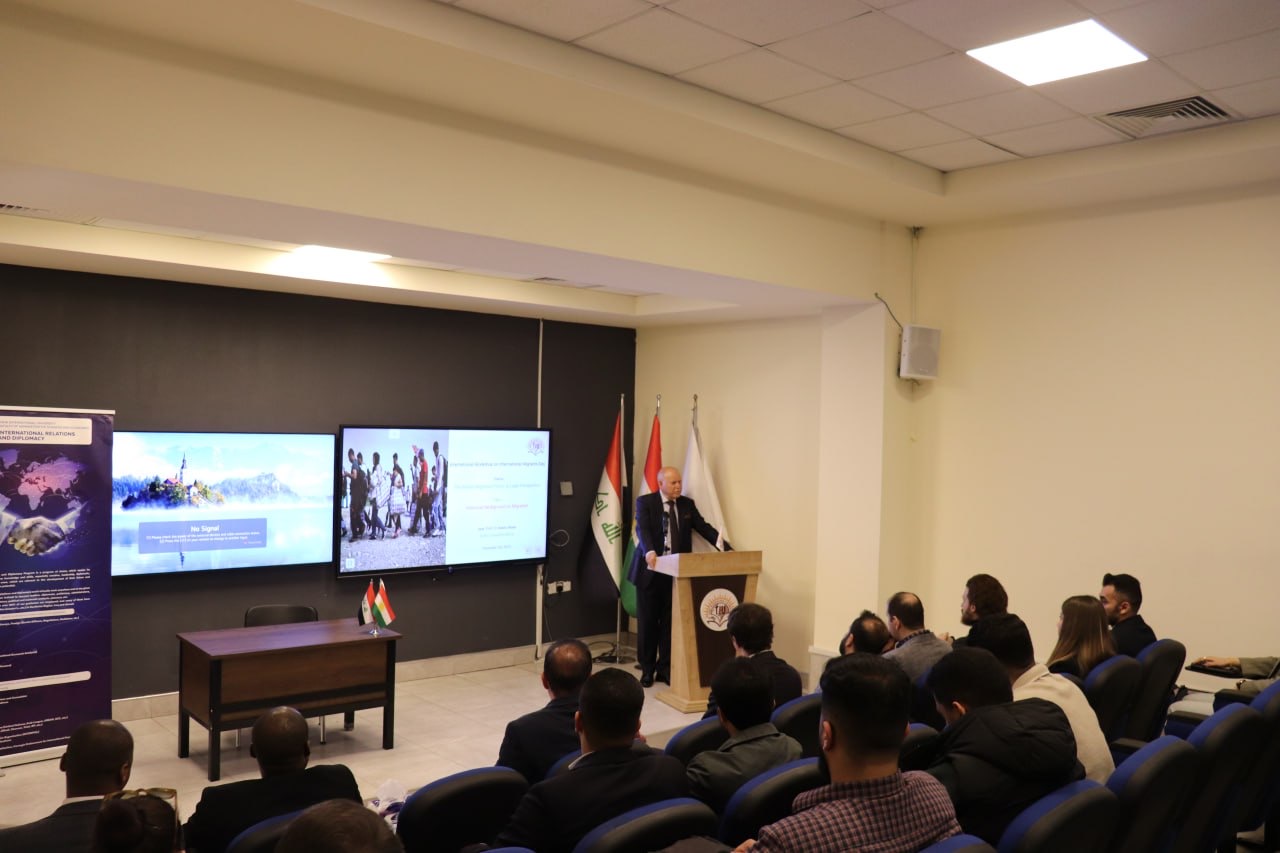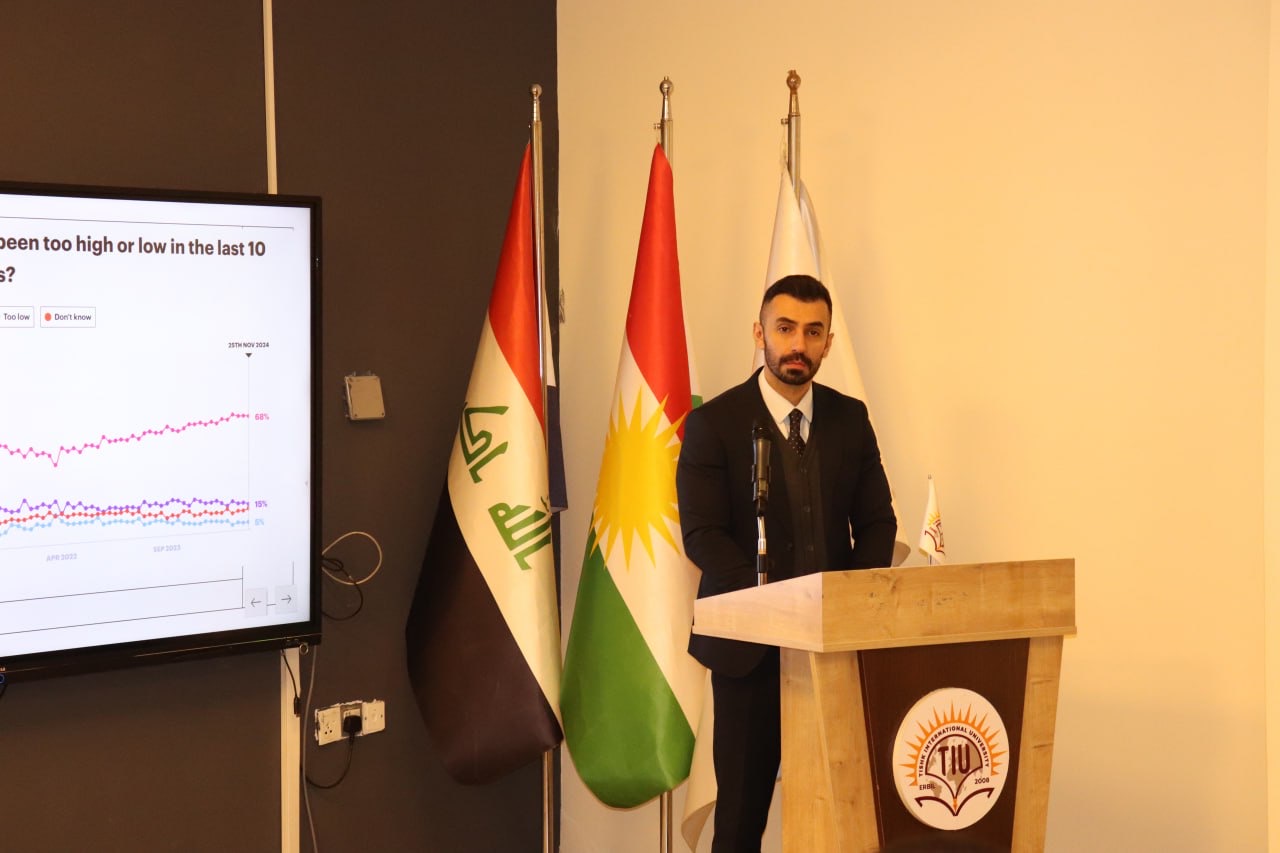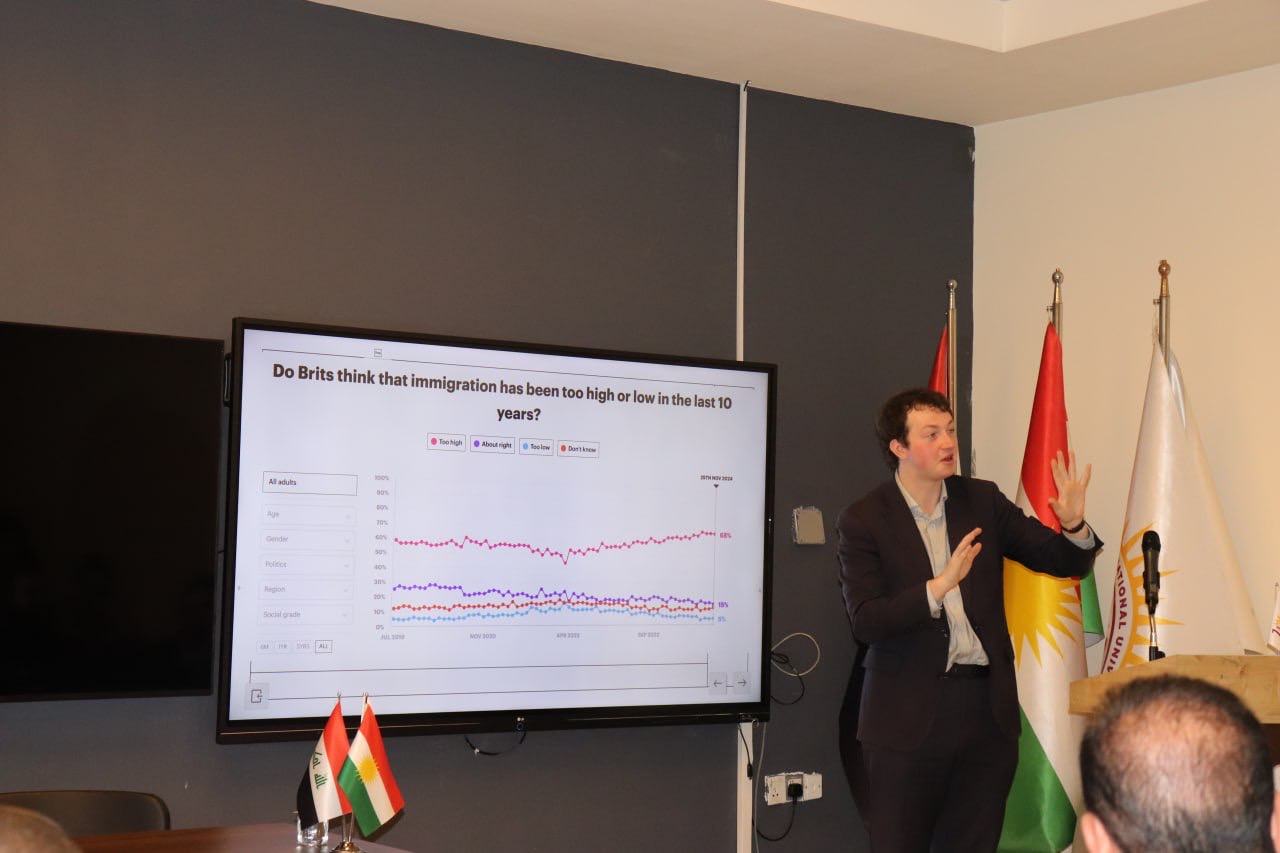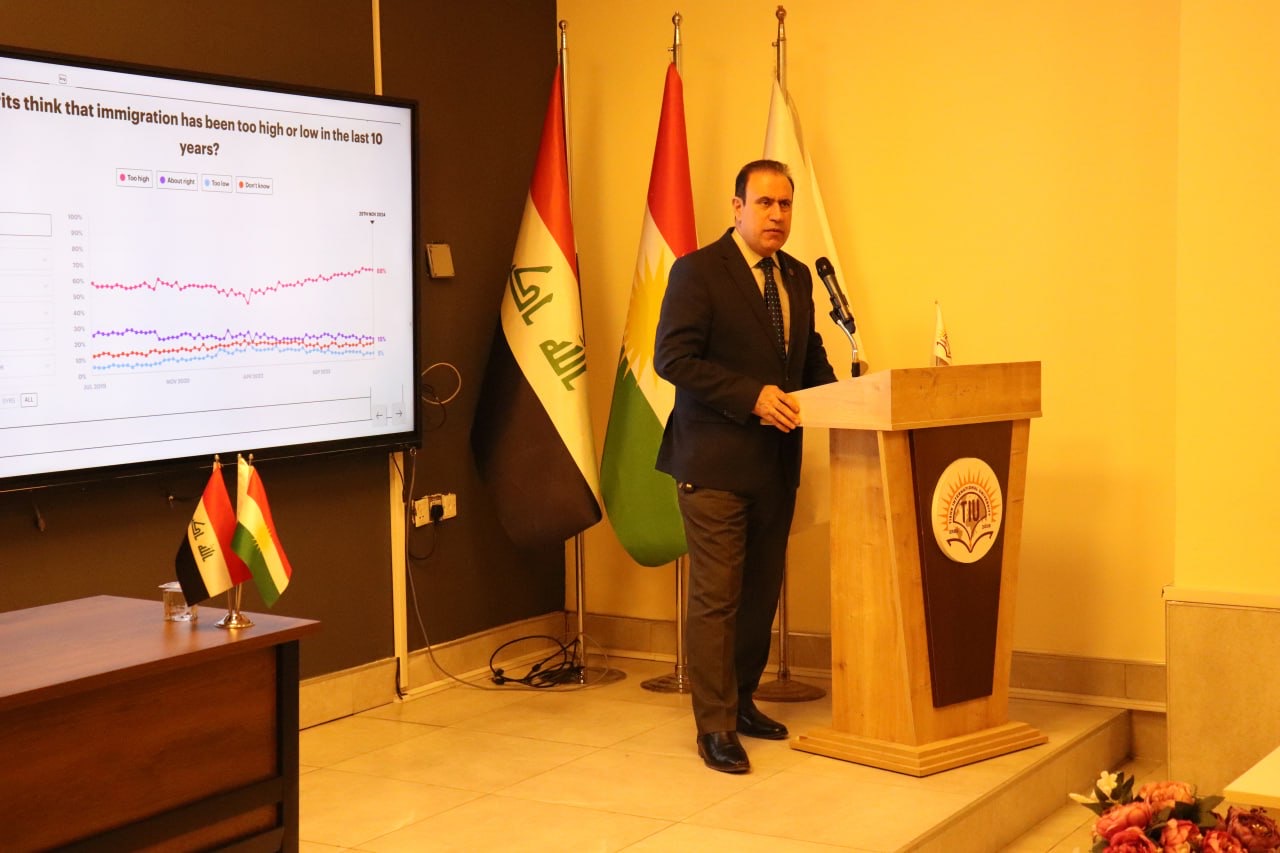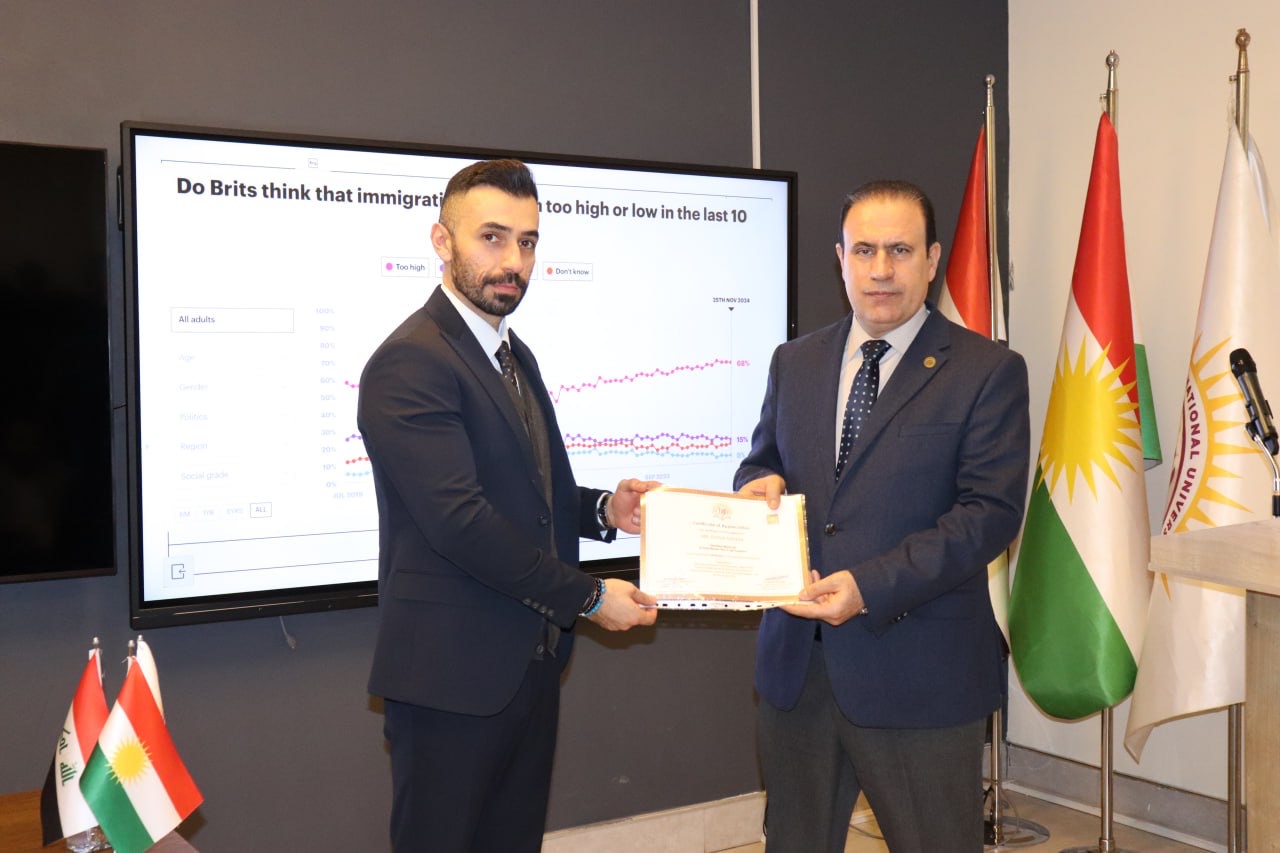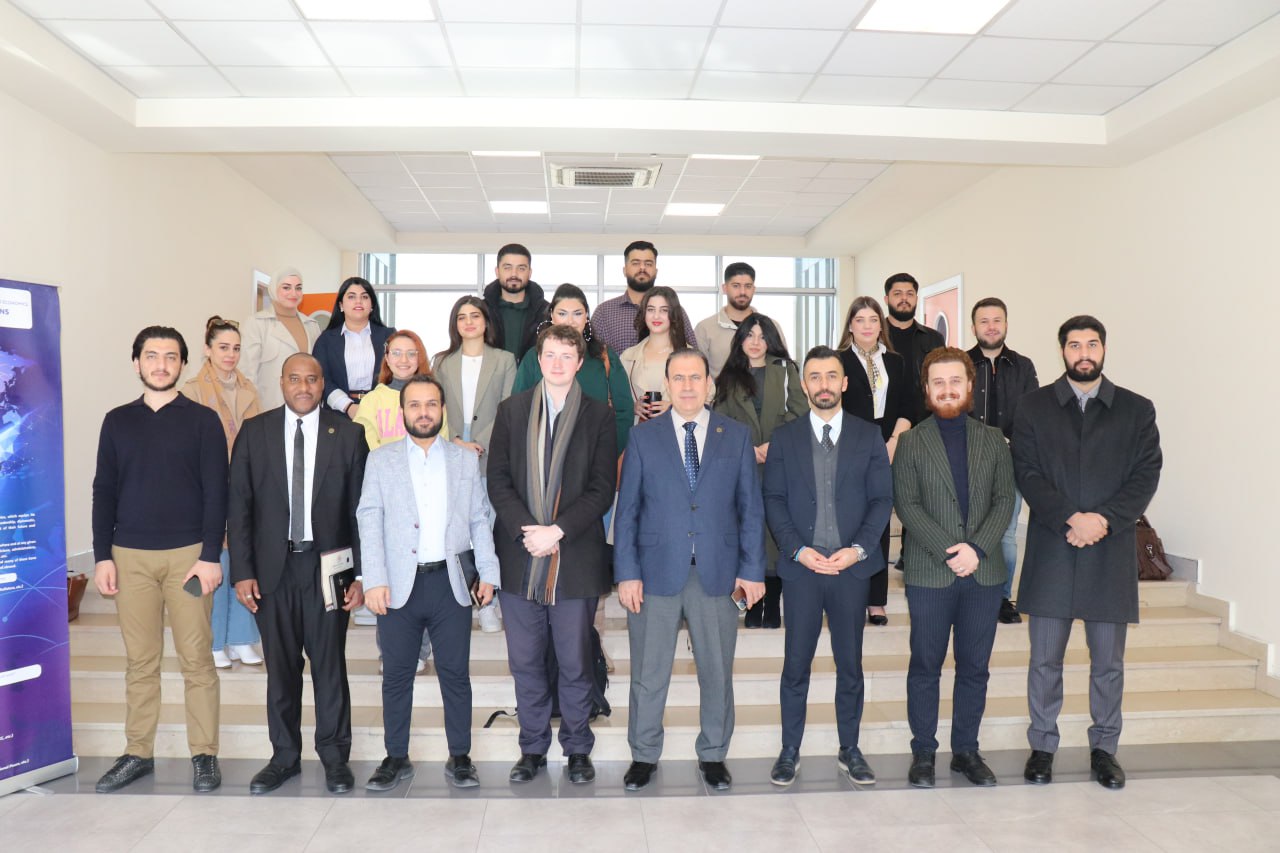

On December 3, 2024, the International Relations and Diplomacy Department at Tishk International University organized an International Workshop on the British Migration Policy: A Legal Perspective. The workshop aimed to enlighten participants about the historical background of migration, the plight of migrants, their contributions, and the British migration policy after Brexit from a legal standpoint. The President of Tishk International University, Prof. Dr. Sultan Abu Orabi, delivered the welcome address, and Mr. Dana Sajadi served as the moderator. The workshop was organized to celebrate this year’s International Migrants Day and aligns with UN Sustainable Development Goal 16: Peace, Justice and Strong Institutions.
In-Depth Sessions on Migration and Policy
The workshop was structured into two key sessions to provide a comprehensive understanding of the topic.
The first session, “A Historical Background on Migration,” was led by Asst. Prof. Dr. Basiru Musa. He provided an insightful explanation of the historical context of migration, the push-pull theory of migration, and the inherent challenges and opportunities associated with it. He also guided the audience through major international migration corridors, offering a broad global perspective on human mobility.
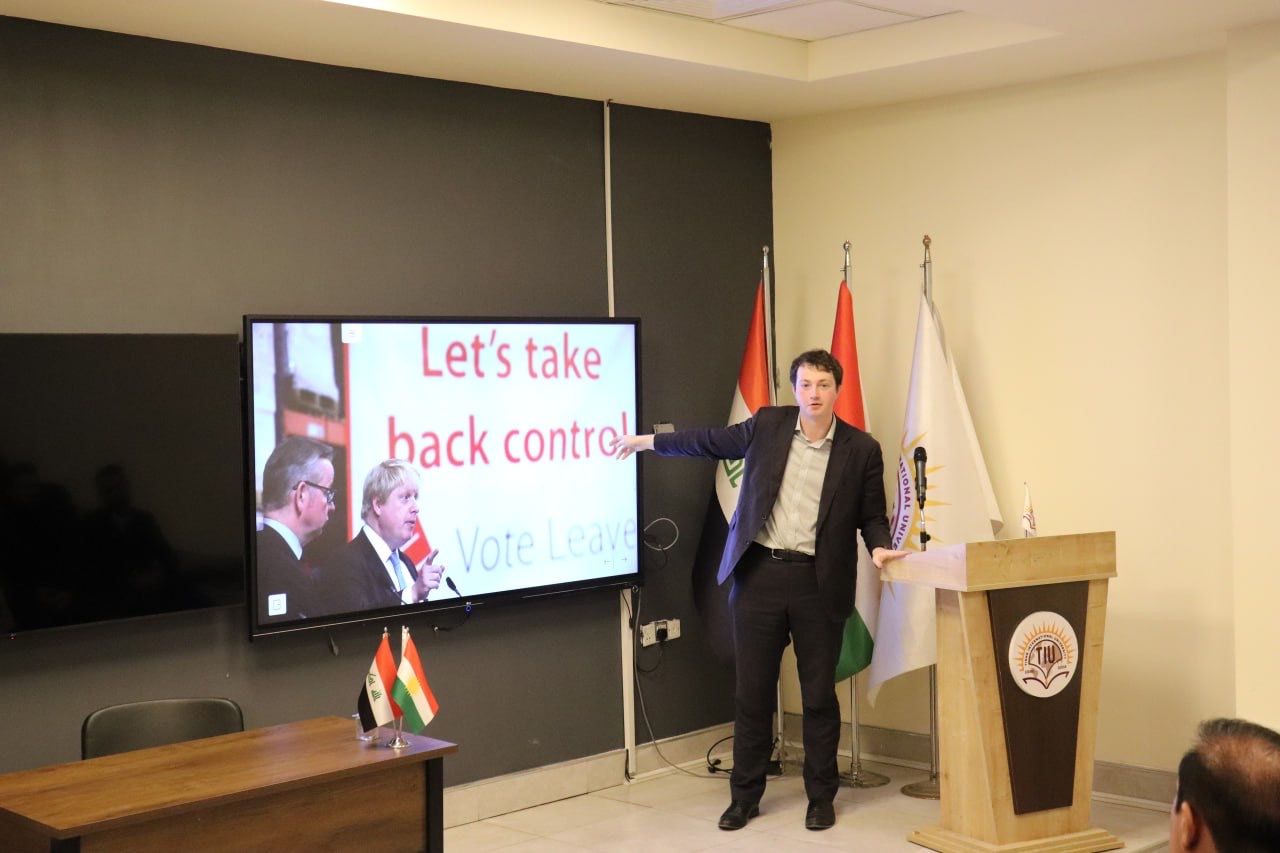
The second session, “Post-Brexit Migration Policy of the United Kingdom,” was presented by Mr. Sam Bidwell from the Adam Smith Institute in London. He gave a rich and detailed presentation on the history of migration in the United Kingdom and the post-Brexit migration policy. Mr. Bidwell highlighted the legal drivers shaping the British migration process, including the points-based system, student visa reforms, post-pandemic health and social care visa reforms, and special considerations for migrants from Hong Kong, Afghanistan, and Ukraine. He also discussed the factors that influence the British migration process, such as domestic processing times, the European Convention on Human Rights (ECHR), and the Human Rights Act.
Key Outcomes and Recommendations
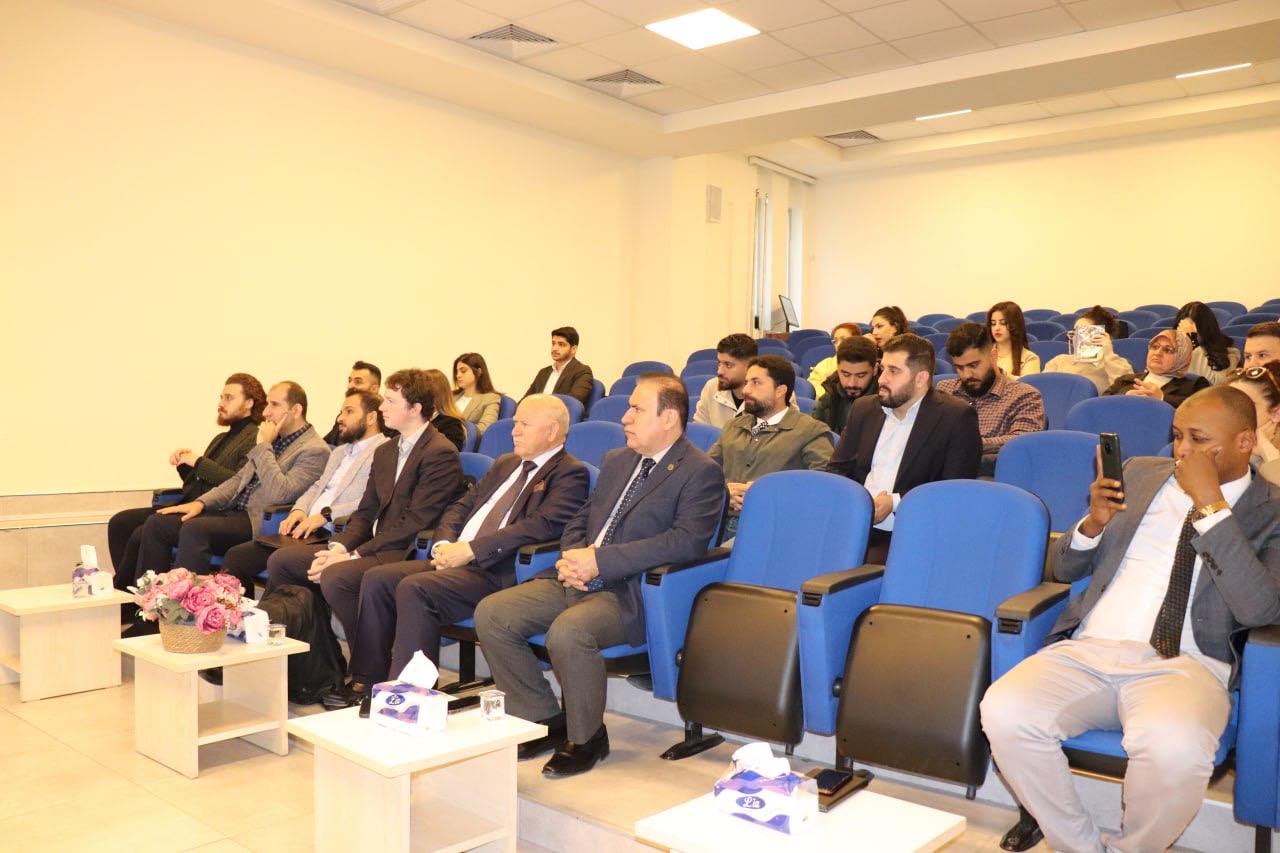
The workshop was well-attended by approximately 30 participants, including TIU staff, students, alumni, researchers, and officials from both public and private sectors. The event successfully enabled participants to gain a deeper understanding of the historical background of migration and, most importantly, the existing British post-Brexit migration policy. The speakers concluded that migration presents both challenges and opportunities, and they provided a series of key recommendations:
- Formulation and implementation of fair and effective immigration policies in post-Brexit Britain.
- Increased international cooperation among states, especially within the EU and beyond.
- Respect for international conventions on the rights of migrants.
- Enhancing the role of the International Organization for Migration (IOM) and similar organizations.
- Increased value addition by migrants to their host and home countries.
- Demonstration of willingness by migrants to learn the local languages of their host countries and respect their cultures and religions.
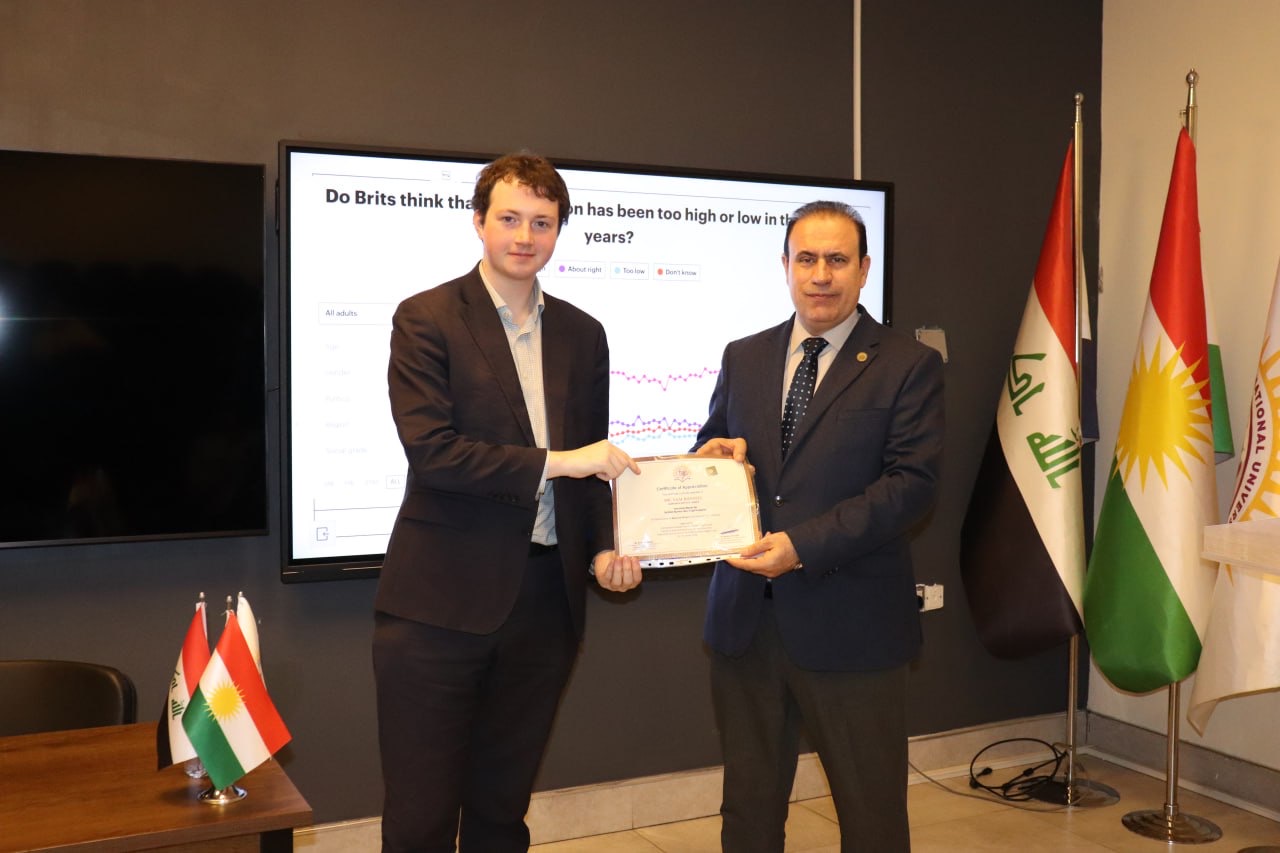
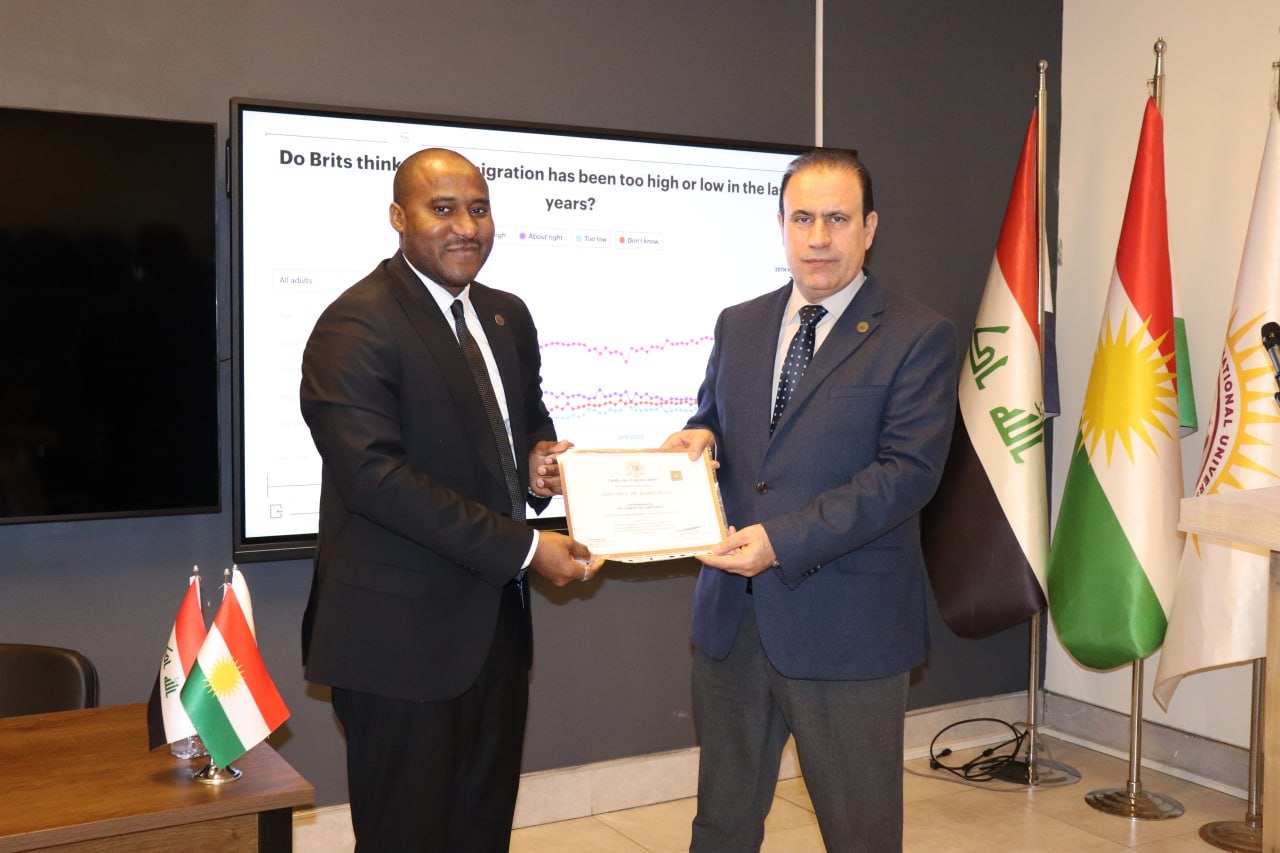
The workshop concluded with a vote of thanks delivered by the Head of the International Relations and Diplomacy Department, Dr. Mohammad Salih Mustafa, who also issued certificates of appreciation to the distinguished speakers.
Keywords: Migration, Post-Brexit Policy, UK Immigration, Legal Framework, UN SDGs, Peace, Justice, Human Rights, International Relations, Academic Workshop, Tishk International University